
AI in E-Commerce: How AI is Transforming the Future of E-Commerce Business


The e-commerce industry is rapidly transforming, primarily due to technological innovations. Among these, artificial intelligence (AI) emerges as a key driver, revolutionizing business operations and customer interactions. For e-commerce companies aiming to succeed in a competitive market, integrating AI is essential, not optional.

AI in E-Commerce
AI fundamentally includes technologies like machine learning, natural language processing, and data analytics. These tools allow businesses to process large volumes of data, gain insights, and make informed decisions. In e-commerce, AI improves customer experiences, streamlines operations, and boosts sales.
AI Techniques Transforming E-Commerce
Predictive Analytics Predictive analytics uses historical data to forecast future trends and customer behaviors. By analyzing past purchase patterns and market trends, e-commerce businesses can optimize inventory levels, ensuring they stock the right products at the right time. This not only reduces costs associated with overstocking or stockouts but also enhances customer satisfaction by meeting demand promptly
Personalized Shopping Experiences Today’s consumers expect tailored shopping experiences. AI enables e-commerce platforms to provide personalized product recommendations based on individual browsing and purchasing histories. This level of personalization not only increases engagement but also significantly boosts conversion rates, as customers are more likely to purchase products that align with their preferences
Chatbots and Virtual Assistants Customer service plays a pivotal role in e-commerce success. AI-driven chatbots and virtual assistants can handle inquiries around the clock, providing immediate responses to customer questions and concerns. This not only improves customer satisfaction but also reduces the burden on human support teams, allowing them to focus on more complex issues
Dynamic Pricing Strategies AI facilitates dynamic pricing, allowing businesses to adjust prices in real-time based on demand, competition, and other market conditions. This strategy ensures that e-commerce platforms remain competitive while maximizing revenue. For instance, during peak shopping seasons, AI algorithms can help businesses determine the optimal price points for their products
Enhanced Visual Search and Image Recognition Visual search technology, powered by AI, allows customers to search for products using images instead of keywords. This innovative feature enhances the shopping experience, making it easier for consumers to find what they want. AI’s image recognition capabilities can analyze product photos, providing customers with accurate results that closely match their queries
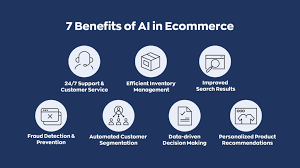
Benefits of AI in E-Commerce
The integration of AI in e-commerce yields numerous benefits, including:
Increased Efficiency: Automation of routine tasks allows businesses to allocate resources more effectively.
Cost Savings: By optimizing inventory management and streamlining operations, AI helps reduce operational costs.
Improved Customer Satisfaction: Personalized experiences and quick response times foster customer loyalty and repeat business
Challenges and Considerations
While the benefits are significant, businesses must navigate challenges when implementing AI. Common hurdles include:
Integration Costs: The initial investment in AI technologies can be substantial.
Data Privacy Concerns: Ensuring customer data protection is paramount, especially with growing regulations around data privacy
Real-World Applications and Case Studies
Leading e-commerce giants like Amazon and Alibaba exemplify the successful application of AI in their operations. Amazon’s recommendation engine, which accounts for a significant portion of its sales, leverages AI to suggest products based on users’ browsing and purchasing behavior. Meanwhile, Alibaba uses AI for fraud detection and inventory management, enhancing security and operational efficiency
The Future of AI in E-Commerce
As technology continues to evolve, the role of AI in e-commerce will only expand. Emerging trends such as augmented reality (AR) and voice commerce are set to revolutionize the shopping experience further, making it even more immersive and convenient for consumers. The future will likely see greater integration of AI tools, allowing e-commerce businesses to remain agile and responsive to market changes
Conclusion
AI is revolutionizing not only the future of e-commerce but also the entire business landscape. Companies utilizing AI gain a competitive advantage, boost customer satisfaction, and enhance profitability. To elevate your e-commerce business, consider hiring a marketing analyst skilled in AI. At FruitFolio, we provide customized services to harness AI insights for your business success. Contact us today to discover how we can help optimize your operations and increase sales!


Comments